
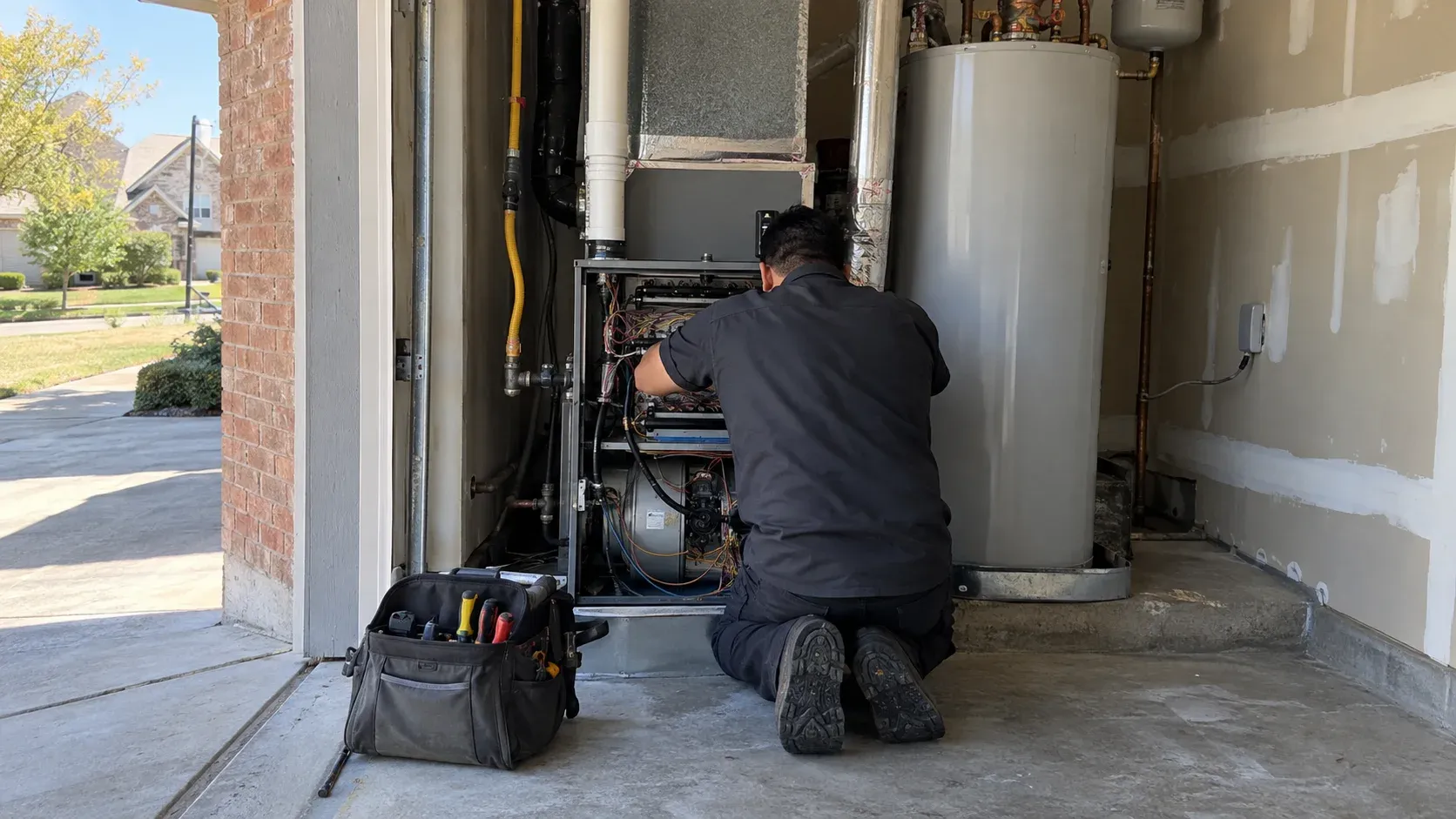
Furnace Repair Service in McKinney, TX
When your furnace stops heating, a licensed technician who finds the real cause fast beats guesswork every time. We handle no-heat calls, strange noises, short cycling, and thermostat problems in older and newer McKinney homes.
Book a Furnace Repair
Repair visits carry a service call fee, and you approve the repair price before any work starts.
Prefer to talk? Call (469) 960-5828
Texas Licensed
License TACLB00155255C
(469) 960-5828
Calls answered live
Open 6 AM Mon–Sat
Until 8 PM on weekdays
Locally Owned
Run by owner Ryan Hardage
In McKinney, cold snaps show up fast. A furnace that sat quiet since last spring suddenly has to run hard, all day and all night. That's when small problems turn into a cold house, and the way the repair starts makes a big difference.
Here's our approach. When your furnace stops heating, finding the real problem fast matters more than guesswork, and that's the standard on every call. Anytime Heating & Air is a licensed McKinney HVAC contractor (License TACLB00155255C), and we repair furnaces in homes across the McKinney area.
This page walks you through how furnace repair works, what a technician checks, and what to expect when we arrive. If your heat is out right now, call (469) 960-5828 and we'll get a furnace repair visit on the schedule.
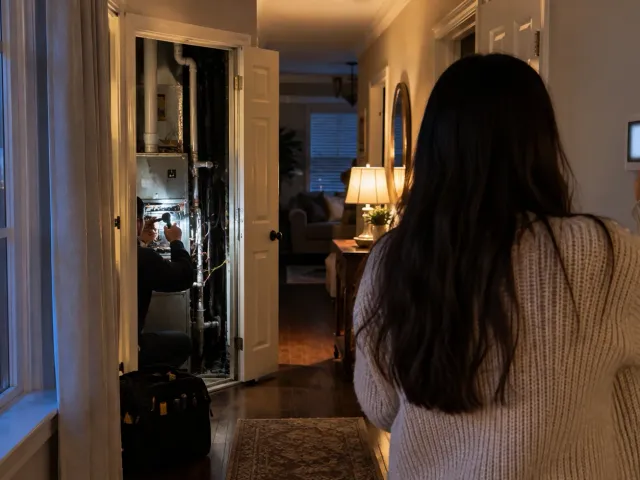
Furnace Repair for No-Heat Emergencies
It's a January night. The temperature outside is dropping toward the teens, and the air from your vents feels cool. You check the thermostat. It's set right. The furnace just isn't making heat.
That's a no-heat emergency, and it's one of the most urgent repair calls we get. In North Texas, furnaces sit idle most of the year. Then a cold snap hits, and many systems get pushed at once. January is usually McKinney's coldest month, and a hard freeze can drop overnight lows into the teens, so a dead furnace isn't something you want to wait out.
When a technician arrives, the job is to find out why the furnace won't heat. Most no-heat problems trace back to a few areas:
- Ignition or pilot problems that keep the burners from lighting
- Electrical faults, like a tripped breaker or a failed part on the control board
- Safety switches that shut the furnace down to protect your home
- Airflow problems that make the system overheat and stop
Once the cause is clear, the technician explains it in plain terms and gives you the repair price, then makes the repair to restore heat once you approve it. A fast, accurate diagnosis is the part that matters most. Guessing wastes time while your house gets colder.
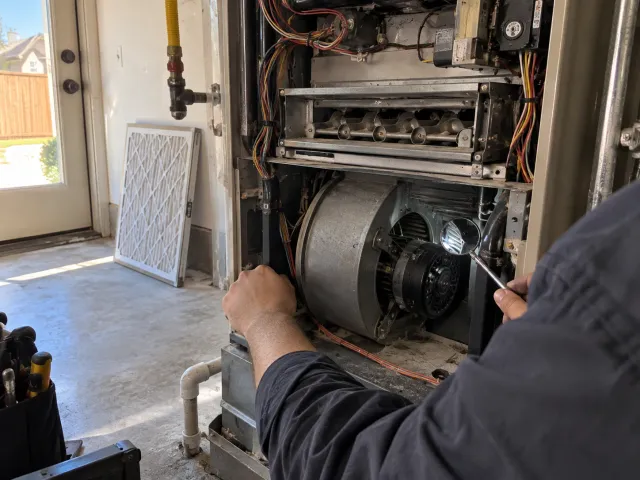
Strange Noises and Short Cycling
Is that banging, rattling, or squealing a sign your furnace is done for? Not usually. A lot of homeowners hear a strange noise and assume they need a whole new system. In many cases, the cause is a smaller mechanical or ignition problem that a repair can fix.
Short cycling is another common worry. That's when your furnace turns on, runs for a short time, shuts off, and starts again over and over. It wears on parts, wastes energy, and leaves some rooms colder than others.
Tracking down noise and short cycling starts with a careful look at the parts that move and the parts that control them: the blower motor and wheel, belts and bearings, the burners and ignition, and the sensors that tell the furnace when to start and stop.
Each sound tends to point somewhere. A rattle can mean a loose panel or part. A squeal often points to the blower. A boom at startup can come from delayed ignition. The technician tracks the sound to its source before talking about any next step.
This is the step people want to rush, but it's worth doing right. Finding the real cause keeps a fixable problem from turning into a bigger decision.
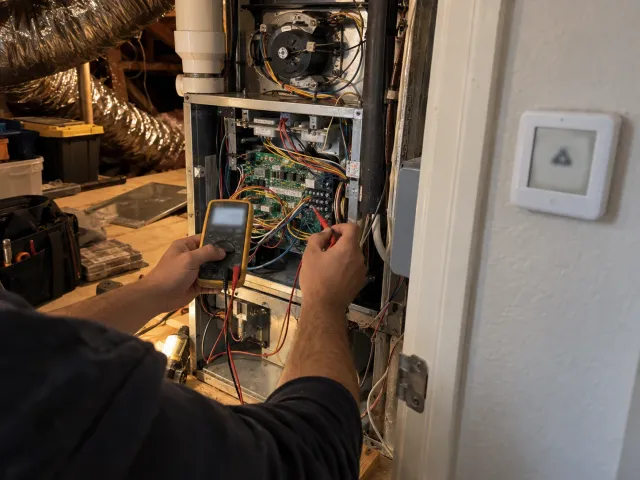
Thermostat and Control Problems
A thermostat is the control that tells your furnace when to run. When the heat won't turn on, it's easy to blame the furnace. But sometimes the furnace is fine, and the problem sits in the thermostat or the wiring between the two.
Fixing a control problem means checking the whole chain, not just one part. A technician will look at:
- Thermostat settings, power, and batteries
- The wiring that carries the signal to the furnace
- The furnace control board that reads that signal
- Sensors and switches that can stop the furnace from starting
This order matters. If the thermostat isn't sending a call for heat, no amount of work on the furnace will help. If the thermostat is working and the furnace still won't respond, the technician knows to look inside the unit.
That's how the right fix gets made the first time. You don't end up replacing parts that weren't broken, and you're not left wondering if the problem will come back tomorrow.
Older and Newer Furnaces Across McKinney
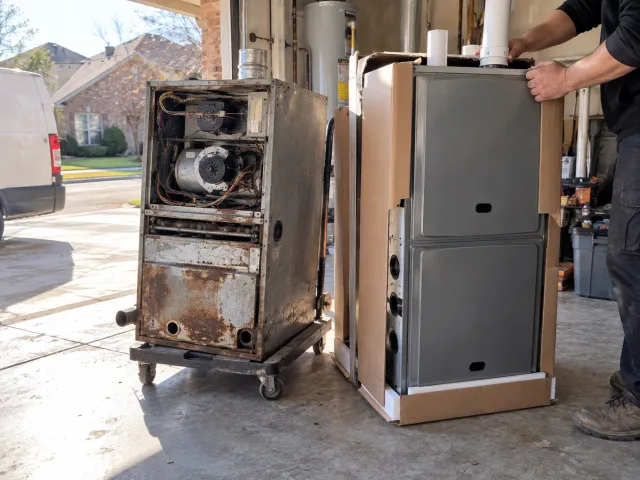
McKinney's homes span a wide range of ages. Near Historic Downtown McKinney, you'll find established mid-20th-century houses with furnaces that have been through many winters. Newer master-planned areas like Trinity Falls are full of new construction with high-efficiency systems. So furnace age and system type can change from one street to the next.
That matters for the repair. An older furnace may have worn parts that are harder to find, and it may need a closer look at wiring, venting, and safety controls. A newer high-efficiency furnace has different parts and different ways of failing, and it relies more on electronic controls and sensors.
A good technician adjusts the diagnosis to fit the furnace in front of them. That starts with checking the age and type of system, then working through the likely causes for that kind of unit, and planning ahead for parts so the repair keeps moving. You shouldn't have to explain your furnace to the person fixing it.
When repairs stop making sense on an older unit, we can size and install a new high-efficiency furnace, then keep it reliable with fall maintenance.
Frequently Asked
Questions
What McKinney homeowners ask most about furnace repair. Don't see yours? Call any day but Sunday and a person will answer.
Call (469) 960-5828How do I know if I need furnace repair or a full replacement?
Most no-heat calls, strange noises, and short cycling are repair fixes, not replacement situations. A technician checks ignition, electrical parts, sensors, and airflow before suggesting anything bigger. Replacement only makes sense when repairs keep failing or parts are worn beyond fixing. Let a real inspection guide the decision, not guesswork.
When should I call for furnace repair instead of waiting it out?
Call as soon as you notice no heat, cold air from vents, banging or squealing sounds, or a furnace that cycles on and off quickly. McKinney cold snaps push idle furnaces hard, and small issues turn into no-heat emergencies fast. The sooner a technician looks, the less likely you'll spend a night without heat.
Does my furnace's age change what kind of repair it needs in McKinney?
Yes. Older furnaces near Historic Downtown McKinney often have worn parts and need closer checks of wiring and venting. Newer high-efficiency systems, common in newer areas like Trinity Falls, rely more on electronic controls and sensors. A technician adjusts the diagnosis based on your furnace's age and type.
What is the most common reason a furnace stops working?
Ignition problems, electrical faults, tripped safety switches, and airflow issues cause most furnace failures we see. These problems often show up together, so a technician checks each area rather than assuming one cause. Finding the real issue fast is what gets your heat back on sooner.
How long does a furnace usually last before it needs major work?
Furnaces typically last many years with regular care, but how long yours lasts depends on maintenance and usage. Repairs can extend a furnace's life well past where homeowners expect, especially when small issues get fixed early. Regular checkups catch wear before it turns into a bigger problem.
Is a strange noise from my furnace a sign I need a new system?
Not usually. Rattles, squeals, and booms often trace back to a loose panel, a blower issue, or delayed ignition, not a dying furnace. A technician tracks the sound to its source before discussing any next step. Most noise complaints turn out to be straightforward repairs.
Let's Get Your Heat Back On
Repairs are priced before any work starts. Call (469) 960-5828 or send the form.
We're not open around the clock. Call Monday through Friday from 6 AM to 8 PM or Saturday from 6 AM to 5 PM and we'll get to you fast. After hours or on Sunday, leave a message or send the form, and we'll call you back first thing the next business morning.