
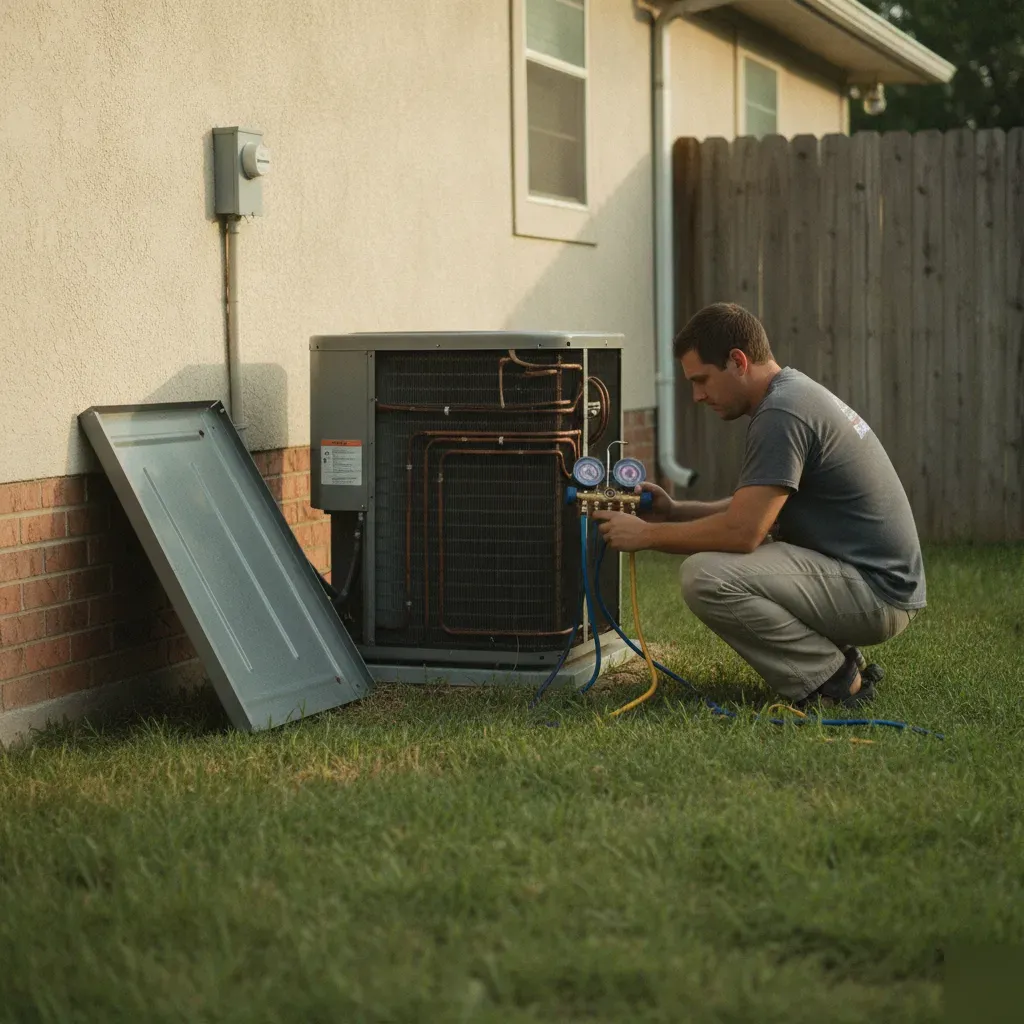
A/C System Repair in Aubrey: Get Your Home Cool Again Fast
Expert HVAC installation, repair & maintenance — residential and commercial
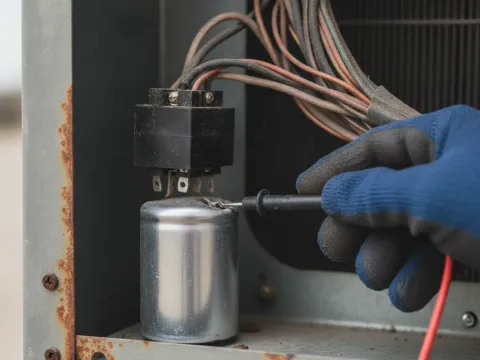
Signs Your A/C System Needs Repair
Your A/C system doesn't fail without warning. It talks to you first. The problem is most homeowners don't know what to listen for until the house is already 84 degrees at 4pm in July.
Warm air blowing from the vents is the big one we get called about most. Sometimes it's a low refrigerant charge, sometimes it's a failing compressor. Nine times out of ten it's not what people think it is. A weak or intermittent airflow matters too, if one room feels fine and another feels like a sauna, that's usually a duct or blower motor issue, not a thermostat problem.
Strange noises deserve attention. Grinding, squealing, or a rhythmic banging sound means something mechanical is wearing out inside the unit. And short cycling, where the system kicks on and off every few minutes instead of running a normal cycle, puts real strain on the compressor over time.
- Water pooling near the indoor unit or a musty smell from the vents
- Ice forming on the refrigerant line or coil
- A sudden jump in your energy bill with no change in usage
- The unit running constantly but never quite reaching your set temperature
Homes in Providence Village built with slab foundations often have the condensate drain line routed through tight crawl spaces or closets, so a small clog there can back up fast and show up as a wet spot on the floor before you ever notice a cooling problem. We see this every single week during peak summer months.
Not sure if what you're noticing is serious? That's pretty common. A funny smell might be dust burning off after a long winter, or it might be a wiring issue. Either way, catching it early is what keeps a repair from turning into a full system replacement.
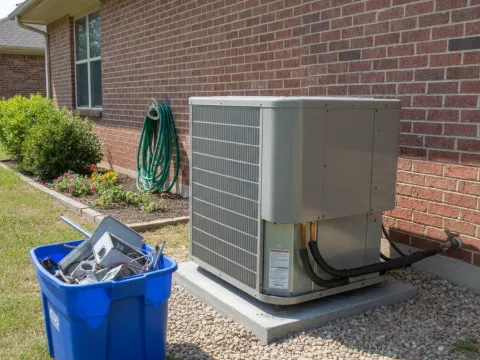
Repair or Replace: What Providence Village Homes Usually Need
Here's the question every homeowner asks us on that first visit. Fix it or replace it? The honest answer depends on the age of your system, the cost of the repair, and how many times you've already called someone out this year.
Aubrey and Providence Village grew fast in the last fifteen to twenty years, and a lot of the homes here still have their original A/C system. That matters. Units installed during the early growth years are now hitting the age where compressors fail, coils leak, and parts get harder to source. If your system is under 10 years old and the repair is a simple fix, like a capacitor or a contactor, repair almost always makes sense. We see this every single week - a $20 part saves a homeowner from a full replacement conversation they weren't ready to have.
But once a system crosses that 10 to 12 year mark, the math shifts. A compressor failure on an older unit often costs close to what a new system would run, and that's before you factor in refrigerant type. Older units using older refrigerant blends are getting more expensive to service every year, since that refrigerant is being phased out industry-wide. So repairing an old unit sometimes means paying premium prices for a part that still won't last.
Our team walks through this with you during the visit. We'll look at the age, the repair history, and whether the unit's efficiency is even worth holding onto. Some units just need one more summer. Others are on borrowed time. It's the same judgment we bring to every heating and cooling system we service as a full-service HVAC contractor in Aubrey, TX, whether the fix ends up being a $20 capacitor or a full system replacement.
Not sure which one you've got? That's exactly why we offer a free estimate, no pressure, just a straight answer based on what we find. And when the age and repair math point to a new unit instead of another capacitor, our AC installation service in Aubrey picks up right where the repair conversation ends.

When You Don't Need a Repair Call Yet
Not every warm room means a broken A/C system. Sometimes the fix costs you nothing but five minutes and a little patience. We'd rather tell you that straight than send someone out for a problem you can solve yourself.
Check your thermostat first. Is it set to "cool" and not "auto fan only"? We get calls where the whole issue was a setting bumped by a kid or a cleaning crew. Next, look at your air filter. A filter clogged with dust chokes airflow and makes your system work harder, and in homes around Providence Village with newer construction, tight duct runs mean a dirty filter shows up as weak airflow faster than in older, leakier homes. Swap it out and give the system twenty minutes before you decide anything's wrong.
Here's what else to rule out before you pick up the phone:
- Breaker tripped at the panel, not just the thermostat screen going dark
- Outdoor unit covered in grass clippings or leaves blocking the coil
- Vents closed or blocked by furniture in one or two rooms only
- Condensate line float switch shut the system off after recent rain
If your system is blowing air but it's just not cold enough on the hottest afternoons, that's often normal strain, not failure. A/C systems work harder past 95 degrees. That's not a repair issue, that's physics.
But if you've checked all this and nothing changes, don't keep guessing. A system that short cycles, trips breakers repeatedly, or blows warm air after a filter change and breaker reset needs a trained eye. We'd rather walk you through the free stuff first, that's just how we operate. Once the cooling is back to normal, a spring A/C system maintenance visit in Aubrey is what keeps a dirty condenser coil or a weak capacitor from putting you right back here next July.
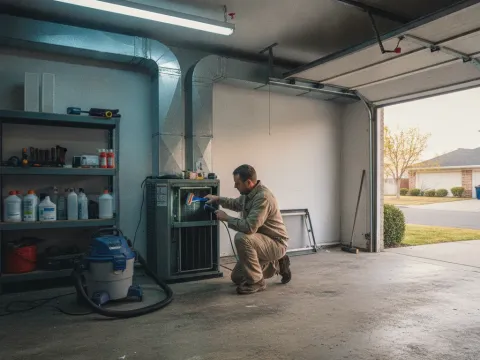
What Happens During an A/C Repair Visit
You call, you tell us what's going on, and we get a technician out to your Aubrey or Providence Village home. That part's simple. What happens after we walk in your door is where the real work starts.
First, we ask questions. When did the problem start? Is it blowing warm air, cycling on and off, or not running at all? Your answers point us toward likely causes before we even open the unit. Then we get hands-on.
- We check your thermostat settings and electrical connections first, that's often where a "broken" system turns out to be something small.
- We inspect the outdoor condenser unit, checking the coils, fan, and refrigerant lines for damage or leaks.
- We test airflow at your indoor vents, weak airflow usually means a dirty filter, a blocked duct, or a failing blower motor.
- We check refrigerant pressure and look for signs of a leak, low refrigerant is a common issue we catch on hot Texas afternoons.
- We test electrical components like capacitors and contactors, these parts wear out from heat cycling and cause a lot of no-cool calls.
- We walk you through what we found, in plain language, before any repair work begins.
Once we know what's wrong, we tell you what it'll take to fix it. No guessing games, no surprise add-ons halfway through. If your system needs a part replaced, a refrigerant leak sealed, or an electrical component swapped, we explain the why behind it. You should understand your own system by the time we leave.
We also offer a free estimate before any major repair work, so you're never stuck deciding on the spot.
Most repair visits run efficiently because we come prepared with the tools and parts techs need for common Denton County A/C failures. But every system's different, some jobs wrap up fast, others take a bit longer if a part needs sourcing. Either way, you'll know what's happening at every step.
How A/C Repair Pricing Works
Let's talk money, because that's usually the first question you've got before we even show up. A/C repair pricing isn't one flat number. It's built from a few moving pieces, and knowing what they are helps you ask the right questions before you hire anyone.
Most repair costs come down to three things: the part that failed, the labor time it takes to get to it, and the refrigerant involved if your system needs a recharge. A blown capacitor is quick work. A failed compressor is a bigger job, sometimes big enough that replacement makes more sense than repair. That's a call we walk you through, not one we make for you.
System age matters too. Older units built for older refrigerant types can cost more to service because the parts and refrigerant itself are harder to source. Newer systems are usually more standardized, so parts availability tends to be simpler.
Here's what drives your repair bill up or down:
- How accessible the unit is - attic units and rooftop commercial units take longer to reach than a simple side-yard condenser
- Whether the part is in stock or needs to be ordered
- How much refrigerant your system needs, if any
- How old the system is and whether other components are close to failing too
- Whether this is an emergency call or a scheduled one
We don't believe in surprise invoices. Before we touch anything, we tell you what we found and what it'll take to fix it. No guessing games.
And this is where the free estimate matters most. We come out, diagnose the actual problem, and give you real numbers before any work starts. Not a guess over the phone. Not a flat rate that ignores what's wrong with your unit. You'll know what you're paying for and why, every single time.
Frequently Asked Questions
Common questions about A/C system repair in Providence Village
How fast can someone get to my house in Aubrey or Providence Village if my A/C stops working?
We schedule same-day visits whenever we can, especially during peak summer months when calls spike. When you call, tell us what the system is doing, like blowing warm air or short cycling, so we can prioritize the visit correctly. A slab foundation home with a clogged condensate line can back up fast, so don't wait if you see water pooling. The sooner we look at it, the less likely a small issue turns into a bigger repair.
What should I expect when a technician comes to check my A/C system?
We start by asking when the problem began and what the system is doing, like blowing warm air or tripping breakers. Then we check your thermostat and electrical connections first, since those cause a lot of 'broken' calls. We inspect the outdoor condenser, test airflow at your vents, and check refrigerant pressure for leaks. By the end of the visit, you'll know exactly what's wrong and what your options are.
Why do so many Aubrey and Providence Village homes get condensate line clogs?
Many homes here have slab foundations with the condensate drain line routed through tight crawl spaces or closets. That tight routing means a small clog backs up quickly, and you'll usually see a wet spot on the floor before you notice any cooling problem at all. We see this weekly during peak summer months. Checking that line early can save you from water damage and an unnecessary emergency call.
Should I repair my old A/C system or replace it?
It depends on your system's age, the repair cost, and how many times you've called someone out this year. If your unit is under 10 years old and needs a simple fix like a capacitor, repair almost always makes sense. Once a system crosses 10 to 12 years, compressor failures often cost close to a full replacement, especially with older refrigerant types getting harder to source. We'll walk through the age and repair history with you before you decide anything.
Do I really need to call for repair if my A/C just isn't blowing very cold air?
Not always. Past 95 degrees, your system works harder and the air may feel less cold, and that's normal strain, not a failure. Before calling, check your thermostat is set to 'cool,' swap a dirty air filter, and check the breaker. If you've done all that and the system still short cycles, trips breakers, or blows warm air, it's time for a trained eye to look at it.
What noises from my A/C system mean I should call for repair?
Grinding, squealing, or a rhythmic banging sound usually means a mechanical part inside the unit is wearing out. These noises don't fix themselves and often get worse the longer you wait. Short cycling, where the system turns on and off every few minutes, puts extra strain on the compressor too. If you hear any of these, it's worth having a technician check the unit before a small part failure turns into bigger damage.